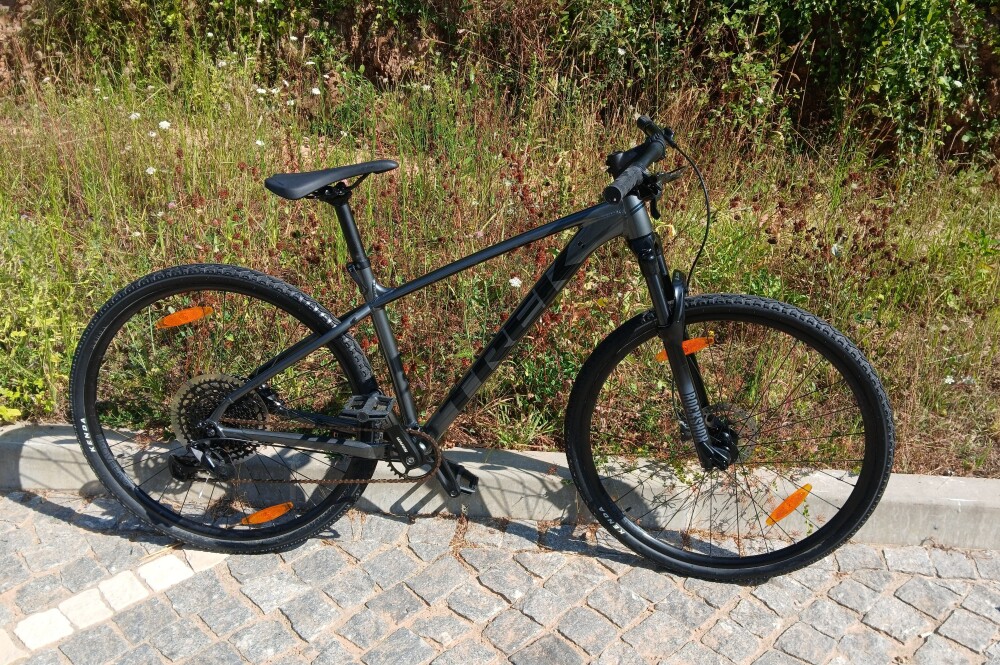
🚴 Cycling Glossary — Complete A–Z of Bike & Cycling Terms
🚴 Cycling Glossary — Complete A–Z of Bike & Cycling Terms
This glossary explains cycling terms from basic to advanced, covering bikes, components, maintenance, training, events, equipment and cycling culture. Each entry has a short definition, a mini Q&A to answer common "what is" / "how to" queries, and links to related BikeMarket.pt articles, the main cycling guide and the FAQ for more details. Use the internal links to explore full guides and deep-dive articles.
A
Aerodynamics
Definition: The study and application of how air flows around rider and bike to reduce drag and improve speed.
What is aerodynamic advantage?
Improving body position, using aero wheels/helmets and optimized frames reduces drag and saves power at speed.
See also: Road bikes.
Aero bars
Definition: Extensions fitted to handlebars so rider can adopt a tucked position in time trials and triathlon.
Are aero bars safe in group rides?
Usually banned in group rides because they limit steering and crash avoidance.
All-mountain (Enduro)
Definition: A mountain bike category balancing climbing ability with aggressive descending capability (often called "enduro").
When to choose?
If you want a single bike for long climbs and technical descents.
Anti-puncture / puncture protection
Definition: Features or materials (liners, reinforced casing, sealants) intended to reduce flats.
How effective?
Good protection reduces minor punctures but may add weight.
B
Bottom Bracket (BB)
Definition: The bearing assembly that allows the crankset to rotate inside the frame.
Types?
Threaded (BSA), press-fit (BB30/PF30), external-bearing (Shimano Hollowtech). Compatibility matters for upgrades.
Related: Complete components guide.
Brake (Rim / Mechanical Disc / Hydraulic Disc)
Definition: System that slows/stops the bike: rim brakes act on the wheel rim; disc brakes act on a rotor at the hub (mechanical uses a cable; hydraulic uses fluid).
Which should I choose?
Hydraulic discs = best modulation & power; mechanical discs = simpler; rim brakes = light and cheap but worse in wet.
Read: Bicycle brakes.
Bonk
Definition: Severe fatigue due to depleted glycogen — "hitting the wall".
How to avoid?
Eat regular carbohydrates during long rides and manage pacing.
See: Nutrition guide.
Bottom Bracket Shell
Definition: The part of the frame where the bottom bracket fits; shell width and diameter determine BB type compatibility.
C
Cadence
Definition: Pedal revolutions per minute (RPM).
Optimal cadence?
Typical road cadence is 80–100 RPM; training and terrain affect ideal cadence.
See training: Training & performance.
Cassette
Definition: Cluster of sprockets on the rear hub that determines gear ratios.
When to replace?
When teeth show wear or after multiple chain replacements; worn cassettes cause skipping.
Read: Cassettes guide.
Chain
Definition: The metal loop that transmits pedalling power to the rear wheel via the cassette.
Maintenance?
Clean and lube regularly; replace when stretched (use a chain wear tool).
Read: Chains guide.
Chainline
Definition: The lateral alignment of the chain relative to the frame centre; important for drivetrain efficiency and wear.
Clipless Pedal
Definition: Pedal system that attaches a cleat on the cycling shoe to the pedal (misleading name: "clipless" because it replaced toe-clips).
Should beginners use them?
They increase efficiency but require practice; try on flat ground first.
See: Pedals guide.
Clincher / Tubular / Tubeless
Definition: Tyre systems: clincher uses tube & bead, tubular is glued to rim, tubeless seals to rim eliminating inner tube.
Pros of tubeless?
Lower pressure for grip, fewer punctures if used with sealant.
See: Tires and Air retention.
D
Derailleur (Front & Rear)
Definition: The mechanism that moves the chain across chainrings (front) or sprockets (rear) to change gears.
Mechanical vs electronic?
Electronic shifting offers precision and programmable features; mechanical is simpler and cheaper.
See drivetrain: components guide.
Dropout
Definition: The frame/fork slot where the wheel axle is inserted; versions include horizontal, vertical, and thru-axle.
Derailleur hanger?
A replaceable part attached to the dropout that protects the frame from damage.
Read: Dropouts & hangers.
Disc Brake Rotor
Definition: The round metal disc attached to the hub that the caliper compresses to slow the wheel.
Sizes?
Common rotors range 140–203 mm; larger rotors increase leverage and heat capacity.
Drafting
Definition: Cycling close behind another rider to reduce wind resistance.
Legal?
Allowed in many road races but not in all triathlons.
E
E-bike (Electric Bike)
Definition: A bicycle with an integrated electric motor to assist pedalling.
Exercise value?
You still pedal; assistance allows longer rides and climbing with less fatigue.
See: Types of bicycles.
Elastomer (Suspension)
Definition: Rubber-like inserts used in seatposts or forks to provide simple suspension damping.
Ergonomics / Bike Fit
Definition: Adjusting saddle height, stem length, handlebar position and cleat setup to suit rider comfort and efficiency.
Why important?
Proper fit prevents pain and increases power transfer.
F
Fork
Definition: The front section of the bike that holds the front wheel and attaches to the headset.
Rigid vs suspension?
Rigid forks are light and efficient; suspension forks absorb trail impacts for MTB use.
Frame
Definition: The main structure of the bike; materials include steel, aluminum, carbon fiber, and titanium.
How to choose?
Material affects weight, comfort and cost; geometry defines handling.
See: Types of bicycles and components guide.
FTP (Functional Threshold Power)
Definition: Roughly the maximum average power (watts) a rider can sustain for one hour; used to set training zones.
How measured?
Via lab tests or field tests (20-minute protocol scaled to 60-minute equivalent).
G
Gravel Bike
Definition: A versatile bike for mixed surfaces: road, gravel, forest tracks; typically disc-brake equipped with wider tires.
Compared to road?
More relaxed geometry, greater tire clearance and mounts for gear.
Read: Gravel bikes.
Gearing (Compact, Wide-range, Close-ratio)
Definition: The selection of chainrings and cassette sprockets that define pedalling effort options.
Grip / Handlebar Tape
Definition: Material wrapped around handlebars to improve comfort and control; choose padding and texture to taste.
H
Hub
Definition: The center part of a wheel housing bearings and the axle; rear hubs contain the freehub/body for a cassette.
Maintenance?
Regular cleaning and bearing service extends life.
Headset
Definition: Bearings and cups that allow the fork and handlebars to rotate smoothly in the frame.
Hybrid Bike
Definition: A blend of road and mountain features for commuting and leisure riding.
See: Bike types.
I
Inner Tube
Definition: Inflatable tube inserted inside clincher tyres; puncture-prone but simple to repair.
Repair?
Patch or replace; spare tube and pump/CO₂ are essential for rides.
Integrated Cockpit
Definition: One-piece handlebar and stem assembly common on modern road bikes for improved aerodynamics and clean cables.
ISO / Tire Size Standards
Definition: International sizing (ETRTO) that clarifies tyre and rim compatibility (e.g. 622×25 for 700c).
J
J-Bend Spoke
Definition: Traditional spoke that bends near the hub flange (versus straight-pull spokes).
Pros/cons?
Common and inexpensive; bend can be a stress point compared to straight-pull designs.
See: Spokes guide.
Juice (Battery capacity for e-bikes)
Definition: Informal term for battery energy (Wh) determining e-bike range.
K
Kinetic Energy
Definition: Energy of motion; relates to speed and mass, used when calculating braking needs and aero losses.
Kickstand
Definition: A support device fixed to the frame allowing the bike to stand upright.
Kids / Child-specific Bikes
Definition: Bikes sized and designed for children with focus on stability and safety.
See: Kids bikes.
L
Lap / Time-trial Wheel
Definition: Aerodynamic wheels used for time trials or triathlons (deep-section rims or disc wheels).
Lightweight / Racing Components
Definition: Parts made from carbon, titanium or machined aluminium prioritizing low mass for performance.
Lockring
Definition: A ring that secures a fixed cog, or in some hub systems secures bearings or adjustable parts.
M
MTB (Mountain Bike).
Definition: Off-road bike family including XC, trail, enduro, and downhill variants.
See: Mountain bikes (BTT).
Mudguard / Fender
Definition: Device that blocks spray from tyres — common on commuter and touring bikes.
Microspline / HG / XD (Freehub Standards)
Definition: Different freehub body standards for mounting cassettes; compatibility matters when upgrading.
Maintenance
Definition: Regular checks, cleaning, lubrication and adjustments that keep a bike safe and performing.
See: Components & maintenance and FAQ.
N
Nutrition (for Cyclists)
Definition: Fuel strategy (carbs, electrolytes, timing) that supports performance and recovery.
Basic rule?
Pre-ride carbs, intra-ride snacks every 45–60 minutes for long efforts, post-ride protein+carbs.
Read: Nutrition for cyclists.
Newtons (N)
Definition: Unit of force — relevant for torque, brake caliper specs and torque wrench settings.
O
Omnium
Definition: A track cycling multi-event competition that tests a rider’s all-round abilities.
Outboard Bearings
Definition: Bearings located outside the bottom bracket shell or hub for increased stiffness and serviceability.
P
Pannier
Definition: Bag mounted to a rack for commuting, touring or errands.
Power Meter
Definition: Device that measures rider power output (watts), commonly mounted on cranks, pedals or hubs.
Why use?
Power is objective and reproducible for structured training (FTP-based zones).
Puncture / Flat
Definition: A hole in the tyre or tube caused by sharp objects; tubeless systems with sealant reduce minor flats.
Planing (in group riding)
Definition: Cooperative rotation where riders take turns on the front to share wind exposure.
Q
Q-factor
Definition: The lateral distance between pedal attachment points on the crankset (affects stance width).
Importance?
Affects knee tracking and pedalling comfort; useful to consider for shoe/cleat alignment.
Quick Release (QR)
Definition: A skewer system allowing wheel removal without tools (replaced on many modern bikes by thru-axles).
R
Rim Brake
Definition: Brakes that apply pads to the wheel rim to slow down; simple and lightweight but less effective in wet conditions.
Rider Position
Definition: The combination of saddle height, saddle fore-aft position, stem length and handlebar angle that defines comfort and power.
See bike fit and saddles: Saddles.
Road Bike
Definition: A bicycle optimized for speed on paved surfaces, typically with drop bars and narrow tyres.
See: Road bikes.
S
Saddle (Seat)
Definition: The bicycle seat; shape and padding vary by discipline and rider anatomy.
How to choose?
Test different widths and shapes; comfort matters more than brand.
See: Saddles guide.
Shifter
Definition: Handlebar-mounted control that commands the derailleur to change gears.
SPD / SPD-SL / Look (cleat standards)
Definition: Different cleat/pedal interface standards for road and MTB shoes; compatibility matters when choosing pedals and shoes.
Suspension (Fork / Rear Shock)
Definition: Mechanism that absorbs impacts. Options include air, coil, elastomer and hydraulic damping.
Read: Suspensions.
T
Tubeless
Definition: Tyre system that seals to the rim and uses liquid sealant to repair small punctures automatically.
Conversion?
Requires tubeless-ready rims/tyres, tape and valves; improves puncture resistance and comfort.
See: Air retention technologies.
Tire Bead
Definition: The edge of the tyre that grips the rim; bead type (wire vs folding/Kevlar) affects packability and weight.
Toe Clip / Strap
Definition: Older pedal retention system that predates modern clipless pedals.
Training Zones
Definition: Intensity bands (based on HR or power) used to structure exercise (e.g., Zone 1 easy → Zone 5 VO2max).
U
UCI
Definition: Union Cycliste Internationale — international governing body for cycling events and rules.
U-lock
Definition: A rigid lock shaped like the letter U, commonly used for securing bikes in urban environments.
V
VO2 Max
Definition: Maximum oxygen uptake — a measure of aerobic capacity and a common performance metric.
Valve (Presta vs Schrader)
Definition: Types of tyre valves: Presta (narrow, high-pressure road use) and Schrader (wider, car-style).
Velodrome
Definition: An oval indoor/outdoor track for track cycling with banked corners used for sprint and endurance events.
W
Wheel (Rim, Hub, Spokes)
Definition: The rotating assembly of rim, spokes and hub; wheel choice affects weight, aerodynamics and durability.
Read: Wheels guide and Spokes guide.
Watt (Power)
Definition: Unit of power; cyclists use watts as an objective measure to quantify effort.
Wheel Size (700c, 650b, 26", 27.5", 29")
Definition: Different dimensions for rims/tyres used across road and MTB categories; choose compatibility with frame and tyres.
X
XDR / XD (Freehub)
Definition: Standards for mounting modern wide-range cassettes (Shimano MicroSpline, SRAM XD/XDR etc.). Compatibility check required before upgrade.
XCO / XCM / XCC (MTB Disciplines)
Definition: Cross-country Olympic (XCO), Cross-country Marathon (XCM), Cross-country Short Circuit (XCC) — different MTB race formats.
Y
Yield (Material Behavior)
Definition: Material deformation under load; relevant when selecting frames and components for stiffness vs compliance.
Yoke (in frames / dropouts)
Definition: Structural element in some frame designs that supports seatstays or dropouts; terminology varies by brand.
Z
Zip-tie / Tie-wrap
Definition: Small fastening device useful for temporary repairs, cable routing and securing accessories.
Zeal / Zoning (training)
Definition: Informal terms referencing motivation (zeal) or training micro-cycles and zones used in periodization.
Related resources











Sale
Calções de ciclismo com alças mulher Siroko BX-W Neon Riders Blue
- 2 months

Sale
Calções de ciclismo com alças homem Siroko BX Neon Riders Green
- 2 months